The Best Version of Leadership
Originally posted on Medium on April 15, 2025
True leadership isn’t about hierarchy, it’s about humanity.
While I was getting my MBA at Duke University’s Fuqua School of Business, I was fortunate to take a class taught by General Martin Dempsey, the 18th Chairman of the Joint Chiefs of Staff. For our final assignment, we had to write about “The Best Version of Leadership” and the kind of leader we aspired to be.
I reflected on my leadership journey — the factors, both internal and external, that shaped who I’ve become. Leadership to me doesn’t mean having the “fanciest” title. It doesn’t mean how much you make or how many people report to you.
For me, it is, and always has been, about people.
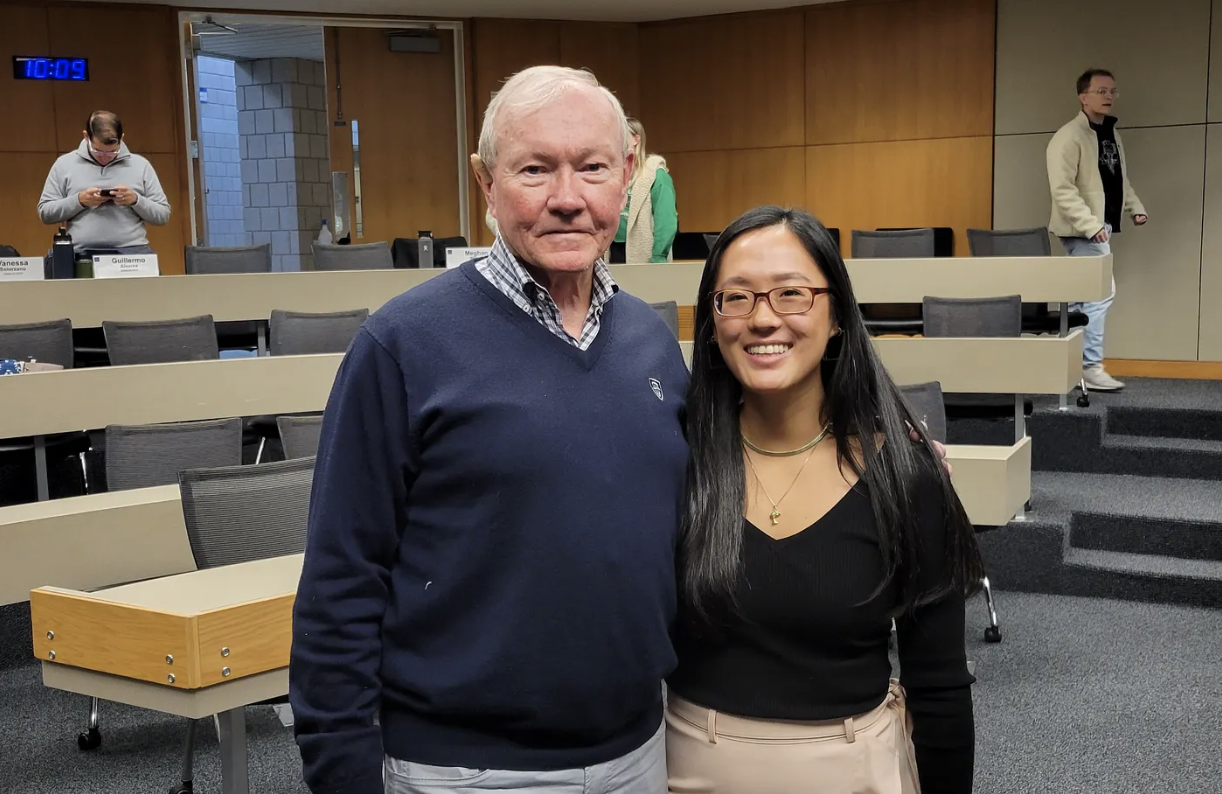
General Martin Dempsey, the 18th Chairman of the Joint Chiefs of Staff, and me.
The Best Version of Leadership
Today, the essence of leadership often gets lost in the pursuit of power; but you can’t be a leader if people don’t follow you and sometimes, people in leadership positions forget that. But Lindsay never did. I met Lindsay while working together at Dropbox, where she was the Head of Design Operations. While I was in a different organization and never reported to her, her leadership ethos has shaped the leader I want to become. Lindsay has a rare blend of competence, empathy, authenticity and a no-BS perspective and I’ll focus on two of her qualities: unlocking people’s potential and leading with purpose.
Introduction
Fresh out of college, I was a high achiever at work, but some of my strongest traits didn’t manifest in the best way. I had succeeded academically but had always been on the quieter side. I like to listen more than I speak and prefer to have time to process before vocalizing my thoughts. I knew I could do more and I wanted more for myself at work, but I didn’t know how to navigate the corporate landscape. While I had role models, I never had the opportunity to watch any of them on a day-to-day basis, until Lindsay. She was the first person, whose intuition was similar to mine, and was even more perceptive than I was, and I saw her use these traits as strengths at work. Observing Lindsay artfully advocate for teams, I saw firsthand how courage and wise influence can elevate groups and I wanted to cultivate those skills to champion people and ideas as well.
As we started to work together, Lindsay actively invested herself in my growth through simple yet high-impact actions. We ran into each other in the office and started to chat more one-on-one. Over breakfast and happy hours, she got to know me, invited me to key meetings, introduced me to people I didn’t know, and made time for genuine conversations, signaling value in my still-developing voice. Work wasn’t just enjoyable; it became fun. As a junior employee, I saw the value of Lindsay investing her time and energy and it meant a lot. And it’s the little things that still stick with me, years later.
… courage and wise influence can elevate groups and I wanted to cultivate those skills to champion people…
Unlocking people’s potential
As part of my work, I was included in a cross-functional group called Design Modsquad that oversaw the hiring process for the organization. I was the only junior person in that group, as everyone else, including Lindsay, were directors. So naturally, having had zero years of work experience, I knew I stood at the bottom of the food chain. I remember I was chatting to Lindsay one day and I told her I was intimidated to speak up in those meetings. She just chuckled and agreed, “Sometimes I’ll look over to you. I can just see wheels turning and I want to know what’s going on in that head of yours”. It was a nonchalant comment and I thought nothing of it. But during the next meeting, she paused a healthy discussion amongst the executives, looked over to me and asked, “Joyce, what do you think”? She had given me the floor to contribute.
At that moment, she signaled that she believed and was confident in my potential, before I fully was. It was onwards and upwards from there. Over time, with Lindsay’s (and eventually everyone else’s) trust came autonomy to launch cross-functional projects improving all aspects of how we recruited — which was beyond my formal role. Seeing my work implemented demonstrated people’s faith in my capabilities, which nurtured self-belief. Most impactful to me, Lindsay’s support equipped me to convert some of my insecurities into valuable assets. Her leadership approach revealed the power of uplifting individuals through getting to know and understanding them deeply first.
After two years, Lindsay moved onto Apple, finally getting the bigger and brighter platform she deserved. Until her last day at Dropbox, she continued to pave the way for me and others to follow in her footsteps. After she left, I ended up transferring into her old team, taking on a lot of the work I had learned from and watched her do for so long.
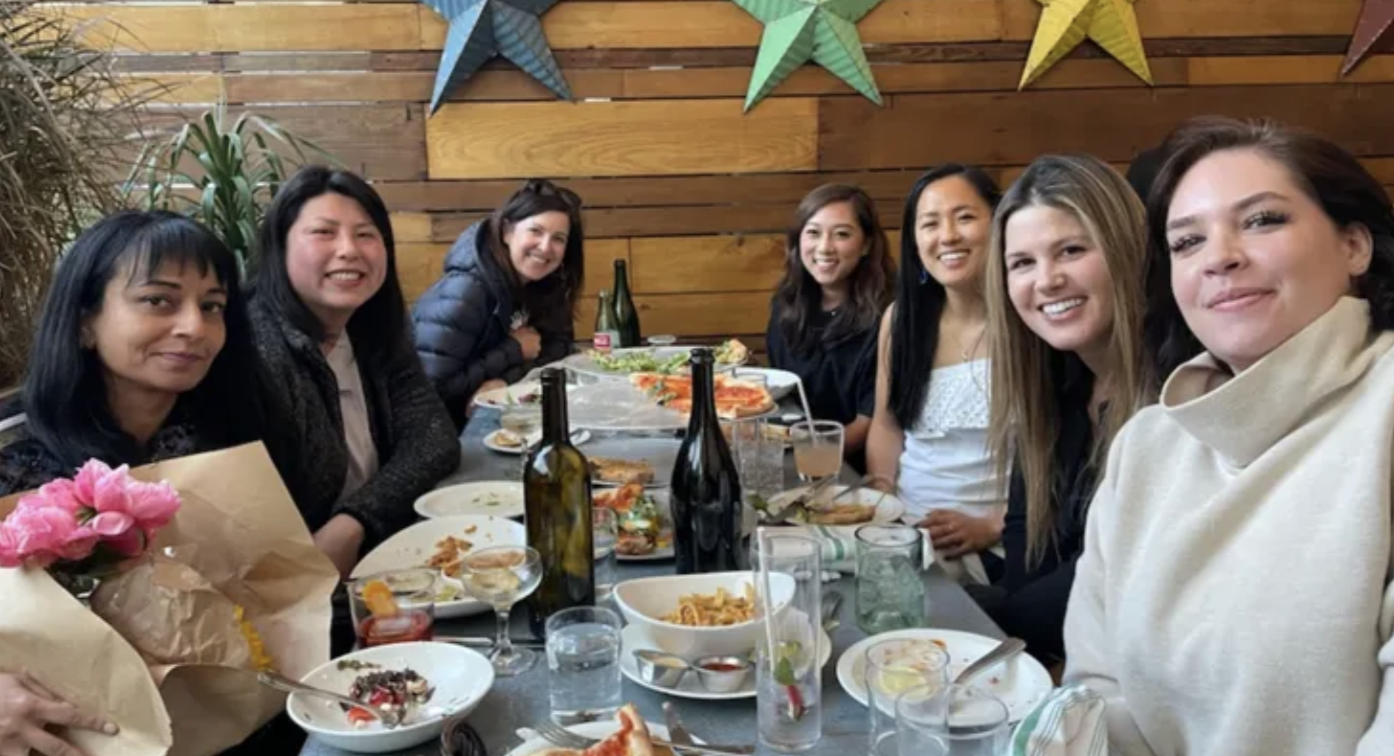
Design Ops team ‘21
Leading with Purpose
Through this transition, I saw even more deeply, another aspect of Lindsay’s leadership: she led with purpose. Lindsay embedded systemic empowerment into Dropbox Design’s foundations through thoughtfully developing processes that ensured the transparent flow of information to engender organizational trust, ownership, and health. Lindsay was the architect behind the operational system that kept all the leaders’ hearts to beat in sync. As I learned the intricacies of her system, it wasn’t only efficient and streamlined, but also thoughtfully designed at every level. In the corporate world, as is everywhere else, information is currency; and currency is always negotiated and strategically leveraged. I started to see the deeper subtleties of interpersonal dynamics amongst senior leaders and the unspoken realities of the corporate landscape. To put it bluntly, I saw selfish leaders hoard information or manipulate it to their benefit. Others were underqualified, so they didn’t want transparency. Or they were apathetic, so didn’t care. As I discovered the invisible aspects of organizational dynamics, I saw how her system not only exposed some of these nuances, but also served to counterbalance.
She built a system where critical information was shared with, and included, all the right people, at the right time — a system that embodied audiences with a level of ownership and trust, through transparency. It might seem like a simple, intuitive thing, but it’s not — the flow, timing, audience, and organization of information is incredibly critical and impactful to any company, in any industry. Companies having such a system implemented is a feat, but a person who can build from the ground up, execute, and institutionalize such a system, ensuring that the values are institutionalized, is another. As the owner of the operating system, her values influenced the entire organization and consequently, its culture. It created a culture where titles, while important, were just titles — rather than an indicator of superiority. A culture where people did things, the right things, because they wanted to; a culture where people felt valued, seen, and heard. She led with purpose and brought a human touch to everything she did. Her legacy lives on and is a reminder that true leadership isn’t about hierarchy, it’s about humanity.
Personal Reflection
I took the insights I observed and learned from her, made many mistakes along the way, and am still experimenting to tweak them into my own. Over the years, as I was exposed to the politics that occur behind closed doors, I began to get more frustrated. Traditional views of leadership look a lot like always being strong and assertive, and often get lost in the pursuit of power — it’s my way or the highway. Society is slowly evolving to expand who gets a seat at the table and who gets heard, but at the end of the day, it’s still a limited selection of the same people at the top, who have all the power and make the most important decisions.
True leadership isn’t about hierarchy, it’s about humanity.
And so I began to think. What type of leader do I want to become? How do we change the broken system we live and work in? Like Lindsay, I want to always remember that I am a leader of people and use whatever platform I have to help pave the way for the next generation. I want to go out of my way to do the little that matter — from remembering names and birthdays, encouraging and asking for people’s thoughts and opinions, whatever level they’re in or title they have, to taking bright-eyed, eager women under my wing and helping them see they’re more capable than they realize.
I also want to remember that leading with purpose is the way to create sustainable and lasting change. Though idealistic, I want to make the world a better, more equitable place for everyone to live in. I want to see more women, like Lindsay, all the way at the top — in positions of true power, in all aspects of society and business. This motivation was an impetus for getting my MBA at Duke University — The Fuqua School of Business; I realized I needed to better educate and prepare myself for this lifelong mission. I need to not only join the system but also learn the intricacies of it, in order for me to change it.
Leadership Legacy
From Lindsay’s leadership legacy, I am committed to paying it forward and nurturing the next generation of leaders. By imparting the value of empathy, unlocking potential, and leading with purpose, I want to create a ripple effect that extends far beyond the boundaries of any corporate structure. The realization that change starts from within has fueled my determination to redesign the broken systems we navigate every day. It’s crazy to think you can change the world, but you should at least try.
Originally written in 2023, as part of “Leadership Imperatives of Our Time” course at Duke University’s Fuqua School of Business.