Lessons from neuroscience
Originally posted on Medium on Jan 2, 2022
Neuroscience is a beautiful field; at its essence, it’s the study of humans and of behavior. It aims to understand humans at the molecular and neural level and builds bridges to understand our thoughts, actions and behavior. There’s three takeaways from neuroscience that anyone can apply at work today.
Context
Neuroscience was my first love; I was always fascinated by people. Why we think, behave, and simply are the way we are.
As an undergrad, I took the opportunity to study and pursue my passion full-time — and I had the time of my life. I learned everything from the cytoskeletons of neurons, the evolution and development of the brain, neural mechanisms that occur whilst sleeping, to topics such as cognition, memory, drugs and neural disorders, to name a few.
Now I’ll admit, I don’t remember every detail of what I learned, but there’s three principles from neuroscience that I still use today, both at work and in life.
Lessons
Sometimes, question the obvious.
Principle: Perception is an interesting thing. While it seems straightforward, it’s really not. So what happens? Light enters the pupil and hits the retina. From there, signals are sent via rods and cones through intricate systems involving the activation or inhibition of certain cells. Once through, these photons then pass through ganglion cells, the optic nerve and tract to the thalamus, and finally to their respective visual processesing destinations. And this is just the beginning. In order for one to achieve visual awareness, these stimuli must go through even more complex processes. At each point, there’s room for randomness, error, and malfunction (enter illusions, hallucinations, blindspots, agnosia etc…).
To sum it up, even things that we think are absolutely certain, like what we see with our two eyes, are not.
Application at work: Sometimes, it’s necessary to challenge assumptions. While some things are obvious, others only appear to be obvious. There’s a nuanced, but potentially significant, difference, whether it’s research insights, root cause analysis, or even hiring. Sometimes, we’re just doing what is “industry standard” and we’re not necessarily re-thinking whether it could be better (or whether something is even needed anymore). Other times, we’re not asking the right questions, so we’re not getting the right data, which mean that we could be getting accurate insights, but for an irrelevant problem. Just as we have blindspots in our vision, all of us have blindspots and biases in our thoughts and judgement. We need to take the time to pause, question what we’re doing, re-evaluate and pivot, if necessary.
2. Experiment to learn, not validate.
Principle: Experimentation is at the foundation of science and of research. It’s actually my favorite part, because you never know what you’re going to get or find out — you never should. You can make the best educated hypothesis, but still end up being wrong or disproven. Sometimes, those are the most fun. Because that means, with all of the information that you currently have, all your best resources and ideas, you haven’t quite yet thought of everything. And so you, with this “wrong or disproven” experiment, just learned something new.
Application at work: Conduct small experiments, early and often. This way, you’ll find what works and what doesn’t work, early and quickly. If you don’t, you’re going to get to a point where you have so much riding on an experiment, process rollout, research study or launch, that you’re essentially in confirmation bias and desirability mode: you’ve invested so much time, energy, resources and finances that you cannot be wrong. You find yourself in a situation where you have to figure out a way to make it work… or else. Experimenting to validate isn’t conducive to you, your team, your customers or anyone. So rather, experiment to learn and to uncover.
3. Be plastic, be flexible
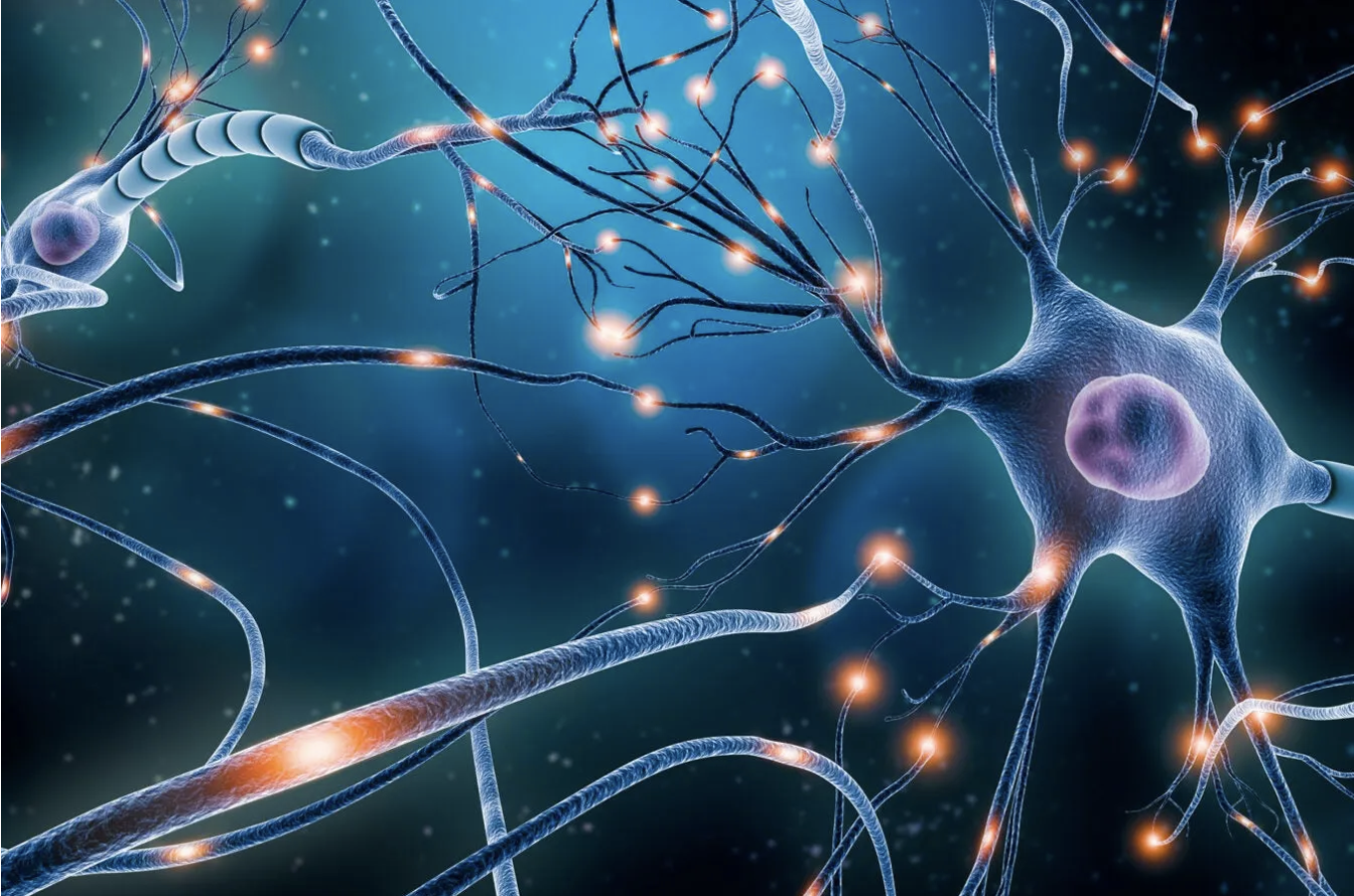
Principle: We used to think that humans are only born with a finite number of neurons and as we go through life, our neural reservoir diminishes. This is only half true — it’s true that our brain decreases in mass as we age and that neurons die. But, it’s often overlooked that humans also have the ability to generate new neurons, through neurogenesis. For example, there’s evidence of neural formation in the hippocampus, a key brain structure in memory formation, consolidation and retrieval. Exercise is one way to induce neurogenesis.
Not only is the amount of neurons important, there’s other factors that play a critical role in cognition, awareness, processing and memory: the frequency of synapses, amount of myelin and strength of neural connections, to name a few. So as we go through life, our brains have the ability to not only generate new neurons but also to heal and grow stronger in other ways.
Application at work: Be like a neuron and be plastic, be flexible. Whatever comes your way, stay agile. Even if you think your only way to grow is by multiplying, start to think outside the box and you’ll find there’s limitless possibilities. Whatever the business throws at you, absorb it and adapt to it. With your flexibility, you’ll enable not only your own, but also collective, learning, adaptation, and growth.
In conclusion
Every now and then, as I peruse my old college notes, color-coded, neatly typed and synthesized, I’m still fascinated by the beauty and the intricacies of the brain. I wonder to myself, how we can scale these insights and learnings and apply them both in life and at work. If we could only understand the machinery behind the brain and mimic them in real life, wouldn’t that be something? We’ll never fully understand the brain and the mind — that’s just a mystery of life. So for now, lessons learned will just have to do.